
Should You Pay Off Buy Now, Pay Later Plans or Credit Card Debt First?
A practical decision framework for choosing between BNPL installments and high-APR credit card debt, with a cash-flow example, animated SVG charts, and clear rules for when each option should come first.
If your budget is tight and you have both a buy now, pay later balance and regular credit card debt, the right order is usually not “whichever balance is smaller.” The better answer is to compare APR, required payment pressure, and the risk of missing an installment.
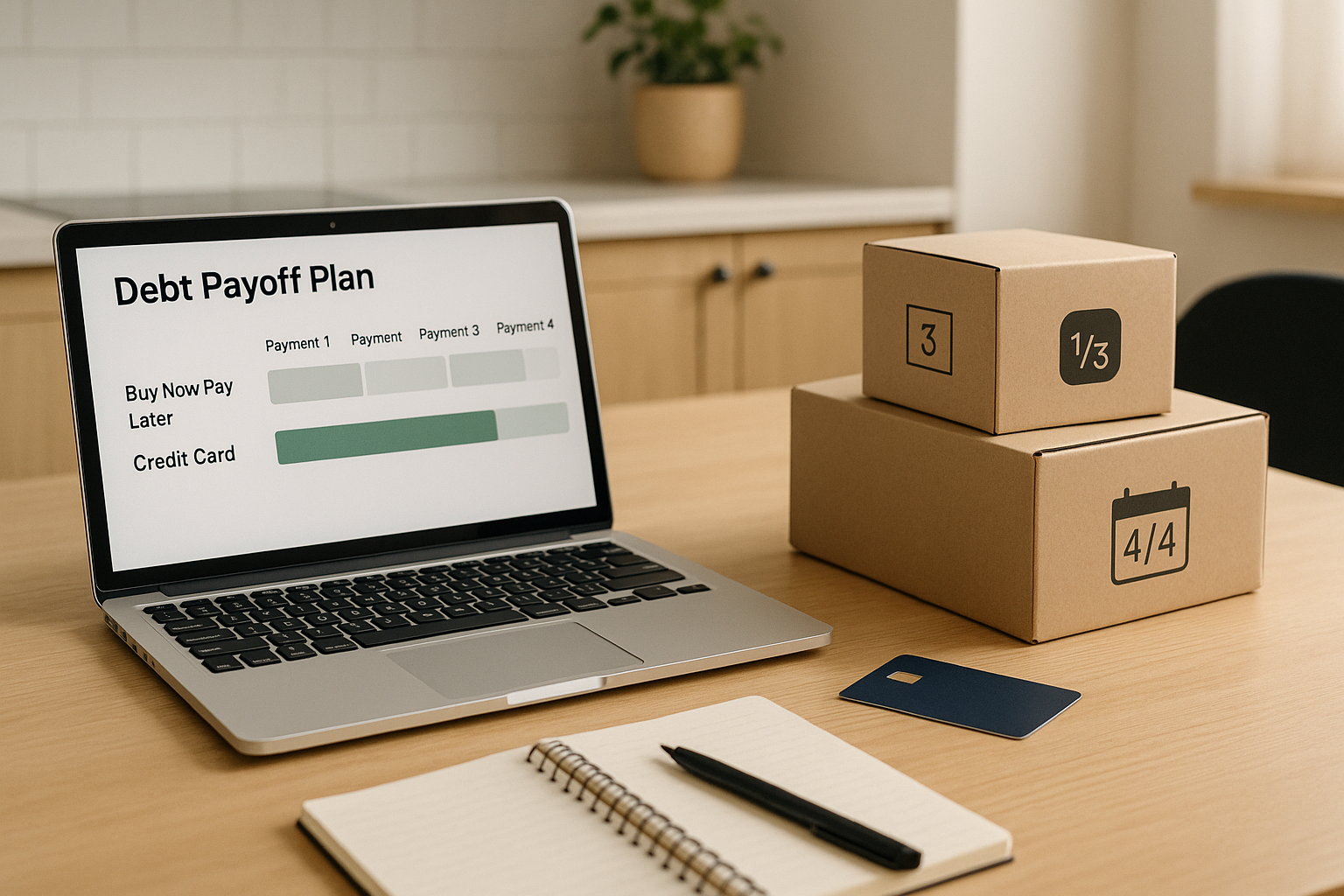
Should You Pay Off Buy Now, Pay Later Plans or Credit Card Debt First?
Here is the short version: if the BNPL plan is truly 0% and you can reliably make every installment on time, the high-interest credit card usually deserves your extra money first. But if your cash flow is shaky enough that you could miss the next BNPL installment, the math is no longer the only issue. The immediate payment risk may matter more.
The Consumer Financial Protection Bureau has said BNPL products are often used as a close substitute for credit cards, and its 2022 market report found the five firms it studied originated more than 180 million loans totaling over $24 billion in 2021. The same report also found late fees and returns/disputes were common enough to matter in real planning, not just in fine print.
The practical rule to use
Use this order:
- Make all required minimum payments.
- Check whether the BNPL plan is really 0%, with no deferred-interest surprise and no likely missed installment.
- If yes, send extra money to the highest-APR credit card.
- If no, stabilize the BNPL plan first, then redirect that payment to the card.
Why high-APR card debt usually wins the math
A 24.99% credit card balance compounds every month. A standard 4-payment BNPL plan usually does not charge interest if you stay on schedule. That means a dollar sent to the card usually prevents more future cost than a dollar sent early to the BNPL plan.
That is the same core logic behind debt avalanche: after minimums are covered, attack the highest rate first. The mistake is assuming BNPL is harmless just because the stated APR is 0%.
Why BNPL can still deserve priority sometimes
BNPL can be the right first target when the issue is payment-risk, not just interest-rate math. The FTC warns that many BNPL plans may charge late fees or other fees, and some providers may report payment history to credit bureaus. The CFPB also found that 10.5% of unique BNPL users in 2021 were charged at least one late fee, and 13.7% of loans had at least some returned merchandise. That is a reminder that BNPL is not the same thing as “free money.”
If your next two paychecks are already spoken for, clearing a short BNPL schedule can reduce the chance of a fast-moving cash crunch. Once that payment stream disappears, you can roll the freed-up amount into the credit card balance.
Example: $5,000 card at 24.99% APR vs. $600 BNPL plan
Assume you have:
- Credit card: $5,000 at 24.99% APR, with a $150 minimum
- BNPL plan: $600 left, split across 4 payments of about $150
- Total monthly debt budget: $450
Both strategies below keep the required BNPL installment current. The difference is where the extra money goes first.
| Strategy | How the extra money is used | Total payoff time | Estimated card interest |
|---|---|---|---|
| Card first | Pay required BNPL installment, then push the rest to the 24.99% card | 15 months | $909.39 |
| BNPL first | Clear the BNPL balance early, then redirect the freed payment to the card | 15 months | $929.48 |
In this example, sending the extra money to the card first saves about $20.09 in interest and finishes about 0 months sooner. That is why the high-APR card usually wins when you can safely keep the BNPL plan on autopilot.
When I would tell you to pay BNPL first anyway
- You are likely to miss the next installment because your checking account is already tight.
- The BNPL plan has late fees, account reactivation issues, or confusing refund timing.
- The purchase may be returned and you want the balance cleaned up before that process gets messy.
- The plan is not really a simple 0% four-pay arrangement and includes financing-style terms.
Best rule of thumb: If the BNPL is truly 0% and stable, keep it current and attack the card. If the BNPL is unstable enough to create a missed-payment problem next month, remove that risk first.
How to decide in five minutes
| Question | If yes | If no |
|---|---|---|
| Is the BNPL balance truly 0% with no deferred-interest catch? | Lean card first | Review BNPL terms carefully; BNPL may move up |
| Can you make every BNPL installment on time without stress? | Lean card first | BNPL may need to be cleared first |
| Is the credit card APR clearly high (20%+)? | Extra money usually belongs on the card | Decision depends more on fees and timing |
| Would a missed BNPL payment create chaos this month? | Stabilize BNPL first | Attack the card first |
Use Debt Freedom Planner to test both orders
This is exactly the kind of payoff choice that feels obvious until you run the numbers month by month. Debt Freedom Planner makes it easy to compare “card first” versus “BNPL first” using your real balances, due dates, and monthly cash flow.
Bottom line
Most of the time, you should keep the BNPL plan current and throw your extra cash at the high-interest credit card. That is the better mathematical move.
But if the BNPL schedule is the debt most likely to create an immediate payment miss, fee, or account mess, clear that short-term risk first and then redirect the freed payment to the card. The right answer is not just “highest rate.” It is “highest rate, unless short-term payment risk is more dangerous.”
Related guides
- How to Pay Off Credit Card Debt When One Card Has 0% APR and Another Is at 29%
- When Is a Balance Transfer Worth It? Break-Even Math for Credit Card Debt
- Debt Snowball vs Avalanche for 3 Credit Cards: Which Pays Off Faster?
- Should You Pay Off a 0% Medical Payment Plan or Credit Card Debt First?
- Main Debt Freedom Planner calculator
Sources
- Consumer Financial Protection Bureau (2022): CFPB Study Details the Rapid Growth of Buy Now, Pay Later Lending — market size, late-fee rate, return/dispute rate, and overextension risks.
- Consumer Financial Protection Bureau (2024): CFPB Takes Action to Ensure Consumers Can Dispute Charges and Obtain Refunds on Buy Now, Pay Later Loans — BNPL products used as a substitute for credit cards and details on dispute/refund protections.
- Federal Trade Commission consumer alert: Want to buy now but pay later? Read this first — notes on late fees, other fees, and possible credit reporting.
0 comments
Ask a question, add context, or share what worked for your household.
Create a free account or sign in to comment, reply, and vote on blog posts.