
How to Pay Off Credit Card Debt When You Get Paid Once a Month
A practical once-a-month paycheck debt payoff plan that shows how to avoid late fees, manage cash flow, and make faster progress without wrecking the rest of your month.
If you get paid once a month, debt payoff feels harder for a simple reason: one paycheck has to survive the whole month. That makes timing matter. The good news is that a monthly pay schedule can still work well if you front-load your plan, cover minimums early, and stop treating the last week of the month like a mystery.
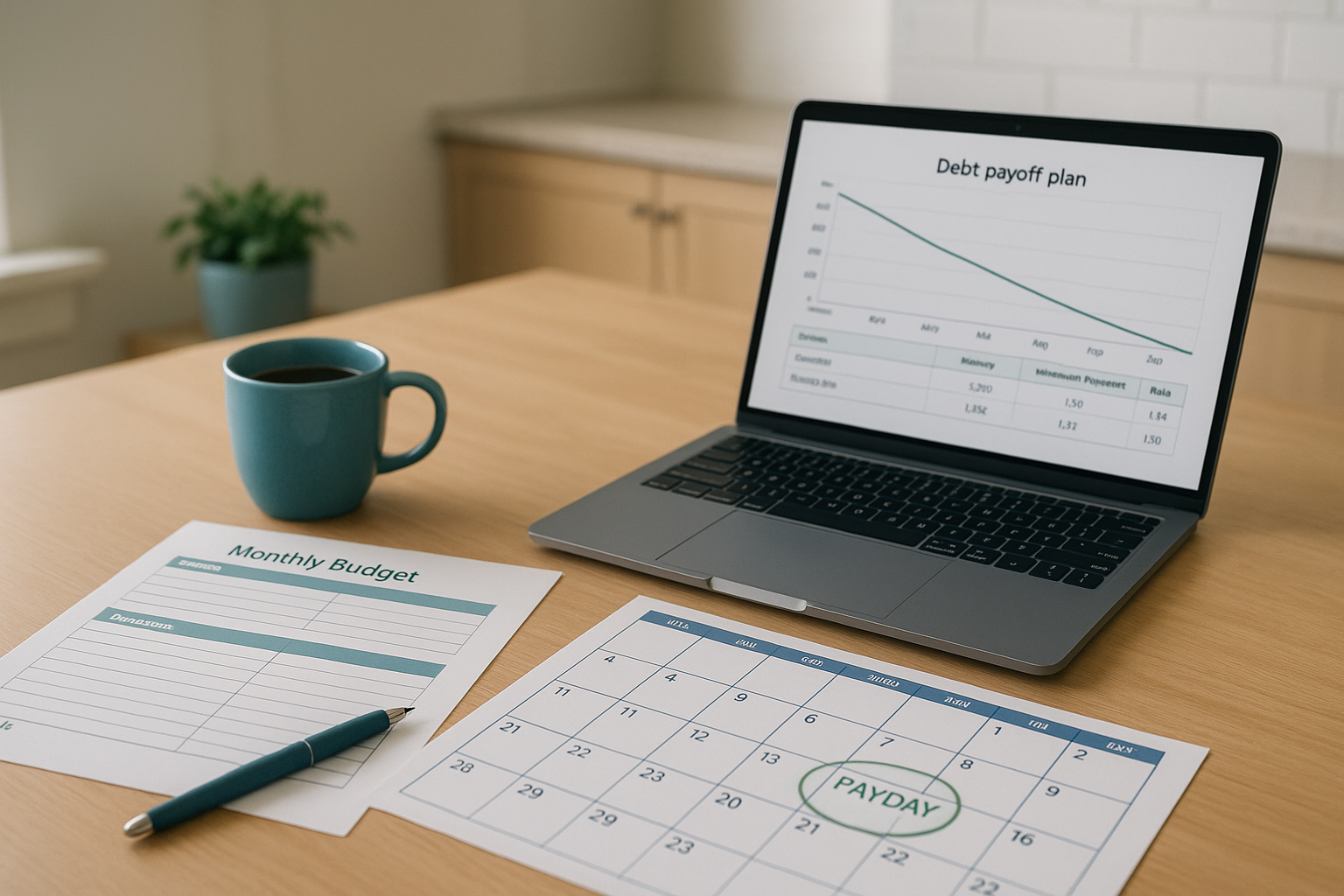
- Schedule every minimum payment from your monthly payday, not from memory.
- Fund essentials first so you do not swipe cards again near month-end.
- Choose one target debt and send the extra payment right after payday.
- If your due dates cluster badly, ask issuers to move them closer to your paycheck date.
Why monthly paychecks create a different debt-payoff problem
Most debt advice quietly assumes your cash flow refreshes every week or every two weeks. A once-a-month paycheck changes that. If you wait too long to make payments, you risk late fees, overdrafts, or a panicked swipe late in the month when groceries, gas, or a school expense hits.
The fix is not complicated, but it does require structure: build the entire month on payday. Consumer.gov says a budget helps you make sure you have enough money every month and recommends listing bills, expenses, and monthly income before the month gets away from you.[1]
The best debt payoff system when you get paid once a month
I think the best default system looks like this:
- On payday, reserve essentials first. Housing, utilities, food, transportation, insurance, and sinking funds come before extra debt payments.
- Automate all minimum payments immediately. CFPB says a payment is generally not considered late if the issuer receives it by 5 p.m. on the due date, but waiting until the due date is still risky.[2]
- Make your extra debt payment right after payday. This prevents the money from getting absorbed by random spending later in the month.
- Leave a month-end buffer. If you spend every dollar on day one, the fourth week can put you right back on the card.
Visual 1: What a strong once-a-month paycheck plan looks like
Hover or tap replay to run the animation again.
A realistic example
Suppose your monthly take-home pay is $4,200 and you have $9,000 in credit card debt at a high APR. Your basic month might look like this:
- Rent and utilities: $1,650
- Food and household: $650
- Transportation and insurance: $500
- Phone, internet, subscriptions: $200
- Minimum debt payments: $300
- Sinking funds and irregular expenses: $300
That totals $3,600, leaving $600 for extra debt payoff. With a once-a-month paycheck, the smartest move is usually to schedule the $300 of minimums and the $600 extra payment as soon as the paycheck lands, then live on the month you already planned. Waiting until the end of the month often turns “extra debt payment” into “whatever is left,” which is usually less.
Visual 2: Sample monthly debt calendar
This shows why front-loading the plan matters when there is no second paycheck coming.
Should you make the extra debt payment right after payday?
Usually, yes. If you already know your essentials are covered, sending your extra payment early is a discipline tool. It removes temptation and locks in progress before discretionary spending expands to fill the space.
There is one exception: if sending that extra payment would leave you too thin for groceries, gas, medicine, or a small emergency, keep a modest buffer instead. Debt payoff plans fail when they are mathematically aggressive but operationally fragile.
What if your due dates are badly placed?
If several cards are due right before payday, call the issuers and ask for due-date changes. CFPB even provides a worksheet for requesting a different bill due date, which is a useful reminder that due dates are often more flexible than people think.[3]
A once-a-month paycheck works much better when your biggest bills and debt payments cluster closer to the date money actually arrives.
Common mistakes to avoid
- Making minimums manually every month. One forgotten date can create a fee and scramble the plan.
- Using the whole paycheck for debt on day one. That can push groceries or gasoline back onto the card.
- Skipping sinking funds. Car maintenance, birthdays, school costs, and annual bills are not surprises. They are delayed monthly expenses.
- Spreading extra money across every card. Make the minimums on all cards, then attack one target balance.
How Debt Freedom Planner helps
This is exactly where a planner beats mental math. You can map your balances, APRs, minimums, and monthly surplus, then test what happens if you keep a bigger buffer, change due dates, or increase your extra payment by $50 or $100.
If you want to stop guessing and see your actual debt-free date, run your numbers in Debt Freedom Planner. It is built for the real question people have: how do I make this plan work with my actual paycheck rhythm?
Bottom line
You can absolutely pay off credit card debt on a once-a-month paycheck. The trick is to stop managing debt reactively. Build the month on payday, automate minimums, send the extra payment early, and protect a buffer so you do not fall back on the card in week four.
Sources
- Consumer.gov, “Making a Budget”.
- Consumer Financial Protection Bureau, “When is my credit card payment considered to be late?”.
- Consumer Financial Protection Bureau, “Request a change in your bill due date” worksheet.
- Consumer Financial Protection Bureau, “What is a grace period for a credit card?”.
0 comments
Ask a question, add context, or share what worked for your household.
Create a free account or sign in to comment, reply, and vote on blog posts.