
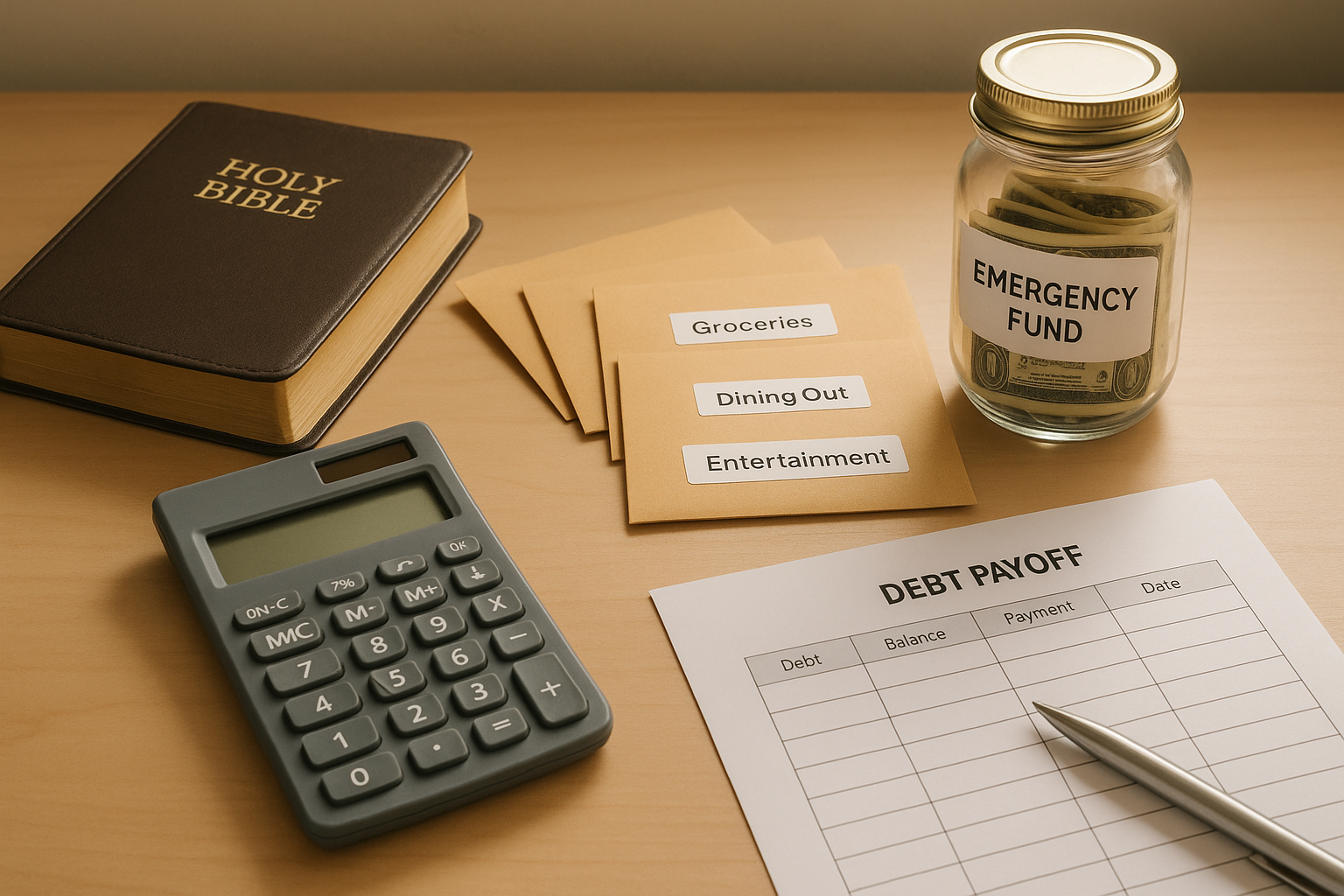
Should You Use Savings to Pay Off Debt or Keep an Emergency Fund First?
Should you use savings to pay off debt or keep an emergency fund first? Here is the smartest order for most families, with examples and a practical plan.
Should You Use Savings to Pay Off Debt or Keep an Emergency Fund First?
If you are trying to decide whether to use your savings to pay off debt or keep an emergency fund first, the short answer is this: keep a small emergency fund, then attack high-interest debt aggressively.
That answer matches both common-sense cash flow and the real problem most families face: if you use every dollar of savings to wipe out debt, the next car repair, medical bill, or income dip often goes right back on a credit card. The result is a frustrating cycle where you pay off debt, then borrow again.
For many Christians, Dave Ramsey followers, and families trying to get serious about stewardship, this is the real tension. You want to stop paying interest. But you also want to avoid turning every surprise into a fresh financial emergency.
The simple rule most people should follow
For most households, the best order is:
- Keep a starter emergency fund in cash
- Keep making minimum payments on all debts
- Put every extra dollar toward your target debt
- Once your non-mortgage debt is gone, build a larger emergency fund
This is close to the logic behind Dave Ramsey’s Baby Steps: save $1,000 first, then pay off non-mortgage debt, then build a 3–6 month emergency fund after that. Ramsey’s reasoning is straightforward: life happens, and a starter buffer keeps small setbacks from becoming new debt (Ramsey Solutions, Dave Ramsey’s 7 Baby Steps).
The Consumer Financial Protection Bureau makes a similar point from a different angle: even a small emergency fund helps you recover faster from unexpected expenses and reduces the chance that a financial shock turns into more debt (CFPB, An essential guide to building an emergency fund).
Why draining savings to zero is usually a mistake
Paying off debt feels productive. And sometimes it is. But wiping out your savings completely can backfire fast.
Here is why:
- Car repairs do not care that you just made a “smart” financial move
- Medical expenses rarely arrive at a convenient time
- Job hours can get cut without warning
- Kids, home repairs, and everyday emergencies do not stop because you are on a debt payoff plan
According to the CFPB, even a minor financial shock can create lasting problems when you have no savings to absorb it. Many people end up relying on credit cards, loans, or even retirement withdrawals when they do not have emergency cash set aside (CFPB).
In plain English: if paying off debt leaves you one flat tire away from borrowing again, you probably moved too much cash out of savings.
So how much emergency fund should you keep?
There is no perfect number for everyone, but here is a useful framework:
If you are in survival mode
Keep at least $1,000 in a starter emergency fund.
That will not cover every crisis, but it can handle a lot of common problems:
- a car battery
- a basic urgent care visit
- a small home repair
- a travel emergency
- a surprise school or kid expense
If your income is unstable
If you are self-employed, commission-based, seasonal, or your hours change a lot, you may want a starter fund bigger than $1,000 before going all-in on debt payoff.
A realistic range might be:
- $1,500–$3,000 for unstable income
- more if your rent, transportation, or medical risks are high
If you already have a fully funded emergency fund
If you already have 3–6 months of expenses saved, you do not need to drain it to prove you are serious about debt payoff.
You may choose to use some excess cash above your target emergency fund to pay debt faster, but keeping a real cushion is still wise.
A real example with numbers
Let’s say you bring home $3,000 per month.
Your monthly essentials are:
- Rent: $1,100
- Utilities: $250
- Food: $500
- Gas/transportation: $250
- Insurance: $200
- Phone/internet: $150
- Minimum debt payments: $300
That puts your core monthly outflow at $2,750.
Now let’s say you have:
- $2,500 in savings
- $8,000 in credit card debt at 24% APR
- $250 extra per month available for debt payoff
Option 1: Use all $2,500 savings on debt
Your debt drops to $5,500 immediately.
That feels great.
But your savings drop to $0.
If a $900 car repair happens next month, that charge probably goes right back on the credit card. You are back in the debt cycle, plus you have stress and no cushion.
Option 2: Keep $1,000, use $1,500 on debt
Now your debt drops to $6,500, and you still keep $1,000 in emergency savings.
Then if you throw $550 per month at the debt ($300 minimum + $250 extra), you keep making real progress while staying protected from smaller emergencies.
That usually leads to a more durable debt payoff plan because you are less likely to undo your progress.
When it can make sense to use savings to pay debt faster
There are situations where using extra savings to pay off debt is smart.
For example:
- your emergency fund is already fully funded
- your job is very stable
- your expenses are low and predictable
- you have more cash than you reasonably need in your buffer
- the debt is high-interest and costing you a lot every month
In that case, using excess savings above your emergency target to reduce debt can be a strong move.
The key word is excess.
Not all savings.
What about Christians and Dave Ramsey followers?
For Christians, this usually comes down to stewardship, not just math.
You are trying to:
- stop wasting money on interest
- avoid being mastered by debt
- protect your household from avoidable instability
- make wise, disciplined decisions instead of emotional ones
That is why the “small emergency fund first, then intense debt payoff” approach is so practical. It gives you a plan you can actually stick to.
It also lines up with why Ramsey starts with a starter emergency fund before the debt snowball: a small cash buffer helps keep normal life from derailing your momentum (Ramsey Solutions).
Common mistakes to avoid
1. Using every dollar of savings except $0
This feels bold, but it often creates a fragile plan.
2. Keeping too much in savings while making tiny debt progress
If you have high-interest debt and a huge cash pile doing nothing, you may be over-buffered.
3. Ignoring income stability
Someone with a stable salary and low expenses can usually keep a smaller starter fund than someone with irregular income.
4. Forgetting the emotional side
The best debt payoff strategy is not just the one that looks best in a spreadsheet. It is the one you can actually sustain for the next 12–24 months.
The best debt payoff strategy for most people
If you are still wondering whether to use savings to pay off debt or keep an emergency fund, this is the practical answer for most households:
- Keep a starter emergency fund
- Do not drain savings to zero
- Attack high-interest debt with focus and consistency
- After debt is gone, grow your emergency fund into a full 3–6 month cushion
That gives you protection, momentum, and a much better chance of actually becoming debt-free.
Run your numbers before you decide
The right answer depends on your actual balances, minimum payments, interest rates, and monthly cash flow.
If you want to see your exact payoff timeline, compare strategies, and decide how much savings to keep while paying off debt, run your numbers with Debt Freedom Planner.
It is the easiest way to see whether keeping $1,000, $2,000, or more in savings will change your debt-free date—and whether that tradeoff is worth it for your household.
Sources
0 comments
Ask a question, add context, or share what worked for your household.
Create a free account or sign in to comment, reply, and vote on blog posts.